
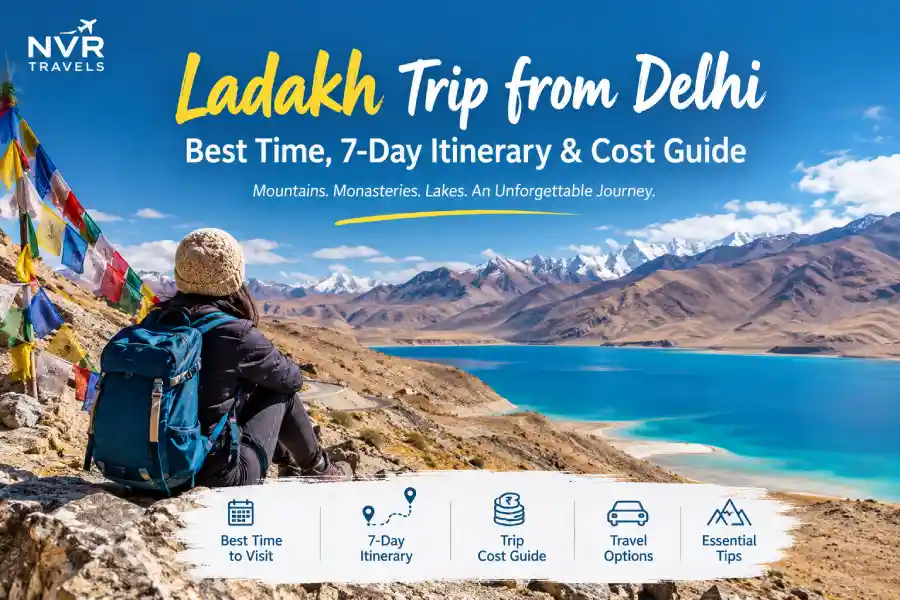

Planning a Ladakh trip from Delhi? With dramatic mountain passes, turquoise lakes, ancient monasteries and wide Himalayan landscapes, Ladakh offers a very different experience from a typical hill-station holiday.
However, travelling to Ladakh requires more planning than choosing a hotel and listing places to visit. You need to consider the season, road conditions, altitude, travel duration and the distance between destinations.
For first-time visitors, a well-planned seven-day itinerary can provide time to explore Leh, visit Nubra Valley and experience Pangong Lake while allowing time for acclimatization.
This guide explains how to plan a Ladakh trip from Delhi, including the best time to visit, travel options, a sample seven-day itinerary, cost considerations and important preparations.
Why Visit Ladakh?
Ladakh is known for its high-altitude desert landscape, mountain scenery, Buddhist monasteries and lakes.
Unlike destinations where attractions are concentrated within one town, many of Ladakh’s most popular places involve long drives through mountain terrain. The journey is part of the experience, but it also needs to be planned carefully.
A Ladakh holiday can include:
- Exploring Leh town and its historic landmarks
- Visiting Buddhist monasteries
- Driving through scenic mountain passes
- Experiencing the landscapes of Nubra Valley
- Visiting Pangong Lake, subject to route access and conditions
- Discovering local food, culture and traditional settlements
Ladakh is particularly suited to travellers who enjoy nature, photography, road journeys and cultural experiences.
What Is the Best Time to Visit Ladakh?
The best time to visit Ladakh depends on the experience you want and the routes you plan to cover.
For a first visit focused on Leh, Nubra Valley and Pangong Lake, the main summer travel season is generally the most practical period to consider. Road accessibility, snowfall and local conditions vary from year to year.
March to April: Early Spring
Early spring can still bring cold conditions, particularly at night and at higher elevations.
Some mountain routes and excursions may remain affected by snow or seasonal access restrictions. This period is better suited to travellers who are flexible and have checked current conditions before booking.
Do not assume that every popular sightseeing route will be operating normally.
May: The Transition into the Travel Season
May can be a transition period for Ladakh travel.
Leh may be accessible by air, while some road journeys and higher-altitude routes may depend on snow clearance and local conditions.
If you plan to arrive by road, verify the status of your chosen highway rather than relying on the usual opening dates.
June to August: Main Summer Travel Period
These months are commonly considered for classic Ladakh sightseeing trips.
Travellers can plan routes around Leh, Nubra Valley and Pangong Lake, depending on road conditions, permits and their chosen itinerary.
Summer is also popular for road trips and outdoor activities. Book transport and accommodation according to your dates, especially when travelling during busy periods.
September: Mountain Scenery and Cooler Conditions
September can be attractive for travellers who prefer cooler weather and mountain photography.
Temperatures generally become colder as the season progresses, particularly during evenings and at higher elevations. Check the current status of roads and excursions before departure.
October to February: Cold Weather and Winter Travel
Ladakh becomes much colder during late autumn and winter. Some road routes and high-altitude excursions may be restricted or unavailable because of snow, ice or weather conditions.
Winter can appeal to experienced travellers seeking a different side of Ladakh, but it requires additional preparation, suitable equipment and careful local planning.
For a conventional first-time sightseeing holiday, confirm that your intended destinations and transport options are suitable for your exact travel dates.
How to Reach Ladakh from Delhi
There are two main ways to plan the journey: fly to Leh or travel by road.
Option 1: Delhi to Leh by Air
Flying to Leh is a practical option for travellers with limited leave.
The airport is close to Leh town, allowing you to begin your stay there before undertaking local sightseeing and excursions.
However, arriving quickly by air means that you reach a high altitude in a short period. Your itinerary must account for acclimatization before you travel to higher locations.
The District Administration of Leh advises tourists arriving by air to take at least 48 hours for acclimatization before travelling to higher-altitude destinations such as Khardung La and Pangong Lake.
This means your first two days should not be filled with demanding excursions.
Option 2: Delhi to Ladakh by Road
Road travel can offer a memorable mountain journey, but it requires more time and careful preparation.
The main approaches are through the Srinagar–Leh and Manali–Leh highways. Their accessibility depends on seasonal road conditions and official restrictions.
Travelling by road does not automatically mean every route will be open when you arrive. Check current road status before departure, particularly in the shoulder season.
For many first-time visitors, flying to Leh and arranging local transport is the simpler option when the available holiday duration is limited.
How Many Days Are Enough for Ladakh?
Your ideal trip duration depends on which places you want to cover.
| Trip Duration | What You Can Plan |
|---|---|
| 4–5 days | Leh and selected nearby attractions, with appropriate acclimatization time |
| 6 days | A compact itinerary, depending on arrival time, route and accommodation arrangements |
| 7 days | More flexibility for Leh, Nubra Valley and Pangong Lake |
| 8–10 days | A slower journey or additional destinations, subject to access and conditions |
A longer trip gives you more room to adjust to the altitude, manage long drives and respond to changing road conditions.
For a first-time visitor, seven days is a useful planning target if the intention is to combine Leh with Nubra Valley and Pangong Lake.
Ladakh 7-Day Itinerary for First-Time Visitors
The following is a sample itinerary for travellers arriving in Leh by air. The route should be adjusted to match your flight times, health, permits, accommodation and current road conditions.
Day 1: Arrive in Leh and Rest
Arrive in Leh, transfer to your hotel and rest.
Avoid scheduling a full sightseeing tour immediately after landing. Drink water regularly, eat lightly and give your body time to adjust.
Even if you feel well, do not assume that you are ready for a demanding journey to a higher elevation.
Day 2: Continue Acclimatization
Keep this day relaxed.
Follow local health guidance and limit activity while acclimatizing. Short, gentle activities around Leh may be possible when appropriate, but strenuous walks, high passes and remote excursions should wait.
If you develop symptoms that concern you, seek medical advice rather than continuing the itinerary.
Day 3: Explore Leh Town
After the initial acclimatization period, consider a relaxed local sightseeing day.
Places to consider include:
- Leh Palace
- Shanti Stupa
- Local markets
- Selected monasteries or cultural sites nearby
Confirm opening hours and local access arrangements before visiting.
Avoid trying to fit every attraction into one day. Leh itself deserves time, and a relaxed schedule is easier to manage at altitude.
Day 4: Travel to Nubra Valley
Begin the journey towards Nubra Valley once your itinerary and local conditions permit.
The journey commonly involves crossing a high mountain pass, so road status and weather should be checked in advance.
Depending on the final route, travellers may explore the valley’s landscapes, local villages and the sand dunes around Hunder.
Nubra Valley offers a different perspective on Ladakh’s terrain, but sightseeing should remain flexible because travel times can change.
Stay overnight according to your selected itinerary.
Day 5: Explore Nubra Valley or Continue Towards Pangong
This day depends on the route included in your trip.
Some itineraries allow additional time in Nubra Valley, while others travel onward towards Pangong Lake when the relevant route is accessible.
Do not assume that a direct transfer between destinations will always be available or suitable. Verify route conditions, permits, accommodation and estimated driving time before finalizing the plan.
For a more relaxed holiday, an additional night can be worthwhile.
Day 6: Pangong Lake and the Return Journey
If Pangong Lake is included and accessible, spend time enjoying the scenery and designated visitor areas.
Pangong Lake is known for its striking mountain backdrop and changing appearance under different light conditions.
The lake lies at high altitude, so carry warm clothing and follow local guidance. The temperature can be very different from that in Leh.
Your overnight location and return journey should be determined by the actual route and the following day’s departure arrangements.
Day 7: Return or Departure
Travel towards Leh or the relevant departure point according to your confirmed itinerary.
Allow adequate time for transfers and flight check-in. Avoid scheduling a long excursion immediately before your departure.
Important: A seven-day plan is a planning framework, not a guarantee that every road, pass or attraction will be accessible. Your final itinerary must reflect current local conditions and a suitable acclimatization schedule.
What Is the Cost of a Ladakh Trip from Delhi?
There is no single price that applies to every Ladakh holiday. Your total budget depends on flights, accommodation, trip duration, road transport, destinations and the number of travellers.
Rather than choosing a package based only on its advertised starting price, compare the complete inclusions.
Main Expenses to Consider
1. Flights or road transport
Return flights to Leh can form a significant part of the cost. Road travel involves a different combination of transport, accommodation and time.
2. Accommodation
The hotel category, room sharing and location all affect the total price.
3. Local transport
A Ladakh itinerary may involve long transfers between destinations. Check which journeys are included in the package and whether the vehicle is private or shared.
4. Meals
Confirm which meals are included and budget separately for meals outside the package.
5. Permits, entry charges and activities
Requirements and charges depend on the destination, current rules and the activities you choose. Confirm the latest requirements before travelling.
6. Personal expenses
Keep a buffer for snacks, shopping, additional transport, equipment and unexpected changes.
How to Compare Ladakh Tour Packages
Before booking, compare these details:
- Number of nights and hotel locations
- Arrival and departure transfers
- The acclimatization schedule
- Places included in the itinerary
- Vehicle and transfer arrangements
- Meals and sightseeing inclusions
- Permit and entry-charge arrangements
- Cancellation terms
- Any additional or optional activities
A package with a lower headline price may not include the same transport, hotel category or excursions as another package.
NVR Travels offers Ladakh tour options that you can compare according to your preferred trip duration and itinerary.
What Should You Pack for Ladakh?
Ladakh’s weather can change considerably between sunny afternoons, cold evenings and higher-altitude locations.
Pack for the actual season and planned activities rather than relying on the weather in Delhi.
Your checklist should include:
- Warm layers and a suitable jacket
- Comfortable walking shoes
- Sunglasses and sunscreen
- Personal medicines
- Identification and travel documents
- A reusable water bottle
- Basic personal first-aid supplies
- Gloves and warmer clothing for colder periods
- Any specialist equipment required for planned activities
During colder months, more substantial winter clothing and suitable footwear may be necessary.
If you take prescription medication or have a medical condition that could affect high-altitude travel, consult a qualified healthcare professional before your trip.
Altitude Sickness: An Important Planning Consideration
Ladakh is a high-altitude destination. Some visitors can experience altitude-related symptoms, especially when ascending rapidly.
This is why acclimatization should be treated as part of your itinerary rather than spare time that can be removed to fit in more sightseeing.
Keep these points in mind:
- Allow the recommended acclimatization period after arriving in Leh by air.
- Avoid strenuous activity during the initial rest period.
- Do not travel to higher elevations before your body has had time to adjust.
- Follow local health guidance and medical advice.
- Seek medical help if symptoms develop or worsen.
- Do not continue ascending when you feel unwell.
A safe itinerary is more important than visiting every attraction on a checklist.
Travel Permits and Road Conditions
Some areas and routes in Ladakh have permit or access requirements. These rules can depend on the destination and the traveller’s circumstances.
Before departure, check current official information and confirm which documents are required for your particular itinerary.
Road conditions can also change with weather, snowfall, maintenance or other local restrictions. If your trip depends on a high mountain pass or remote excursion, keep an alternative plan available.
Avoid relying solely on older travel blogs for current access information.
Where Should You Stay in Ladakh?
Your accommodation should match the route and the amount of driving planned for each day.
Leh
Leh is a convenient base for arrival, acclimatization, local sightseeing and organizing onward travel.
For visitors flying in, it also provides the opportunity to rest before travelling to higher-altitude destinations.
Nubra Valley
An overnight stay in Nubra Valley can reduce the need to return to Leh after a full day of driving.
The right location depends on the route, accommodation availability and the attractions included in your itinerary.
Pangong Area
An overnight stay near Pangong Lake may allow more time to appreciate the landscape, but the high-altitude setting requires suitable preparation and attention to local conditions.
Accommodation availability and facilities can differ from what you might expect in a larger town. Confirm what is included before booking.
Should You Book a Ladakh Tour Package?
A tour package may be useful if you prefer to have accommodation, local transfers and selected sightseeing arranged together.
This can simplify planning when your itinerary includes several destinations separated by long mountain journeys.
Before booking, confirm that the proposed schedule allows adequate acclimatization and that the provider has accounted for seasonal access and realistic transfer times.
For independent travellers, planning each component separately can offer flexibility, but it also requires you to coordinate transport, hotels and changing conditions.
The right option depends on your budget, travel experience and preferences.
Frequently Asked Questions
What is the best time to visit Ladakh from Delhi?
For a conventional sightseeing trip covering Leh and popular surrounding destinations, the main summer travel season is generally the most practical period. Confirm road accessibility and local conditions for your dates.
How many days are enough for a Ladakh trip?
Four to five days may suit a shorter visit focused on Leh and selected nearby attractions. Around seven days gives you more flexibility to consider Nubra Valley and Pangong Lake.
Can I visit Ladakh by flight from Delhi?
Yes. Leh can be reached by air from Delhi, subject to the available flight schedule. Travellers arriving by air should plan for acclimatization before visiting higher-altitude areas.
Is a five-night, six-day Ladakh package enough?
It can suit a compact itinerary, but the actual experience depends on the destinations included, flight times and the acclimatization schedule. Check the day-by-day plan before booking, especially if it includes Nubra Valley and Pangong Lake.
Is Ladakh suitable for families?
Families can visit Ladakh, but altitude, long drives, cold conditions and limited facilities in remote areas should be considered. Consult a healthcare professional when travelling with young children, older adults or anyone with relevant medical concerns.
Do I need permits for Ladakh?
Requirements depend on the destinations and current rules. Check official guidance for the exact route and traveller category before departure.
Can I visit Ladakh in October?
October can bring colder weather and changing road conditions. Some routes may be affected by snow or seasonal restrictions, so verify local accessibility before confirming your trip.
How can I reduce the cost of a Ladakh holiday?
Compare travel dates, accommodation categories, room sharing, group transport and package inclusions. Do not reduce the acclimatization period simply to shorten the trip.
Plan Your Ladakh Trip with NVR Travels
A successful Ladakh holiday starts with a realistic itinerary. Choose your travel season, allow sufficient time for acclimatization, verify road access and decide whether you want a shorter Leh-focused trip or a longer journey covering Nubra Valley and Pangong Lake.
NVR Travels offers Ladakh tour options for travellers looking to explore the region with a planned itinerary.
Review the available packages, compare their inclusions and confirm that the selected duration matches your preferred destinations and travel requirements.
Planning a Ladakh trip from Delhi? Share your travel dates, number of travellers and preferred trip duration to discuss a suitable itinerary.
0 Comment